
Eva Luna Ortiz-Sálwet
Official Biography
Education
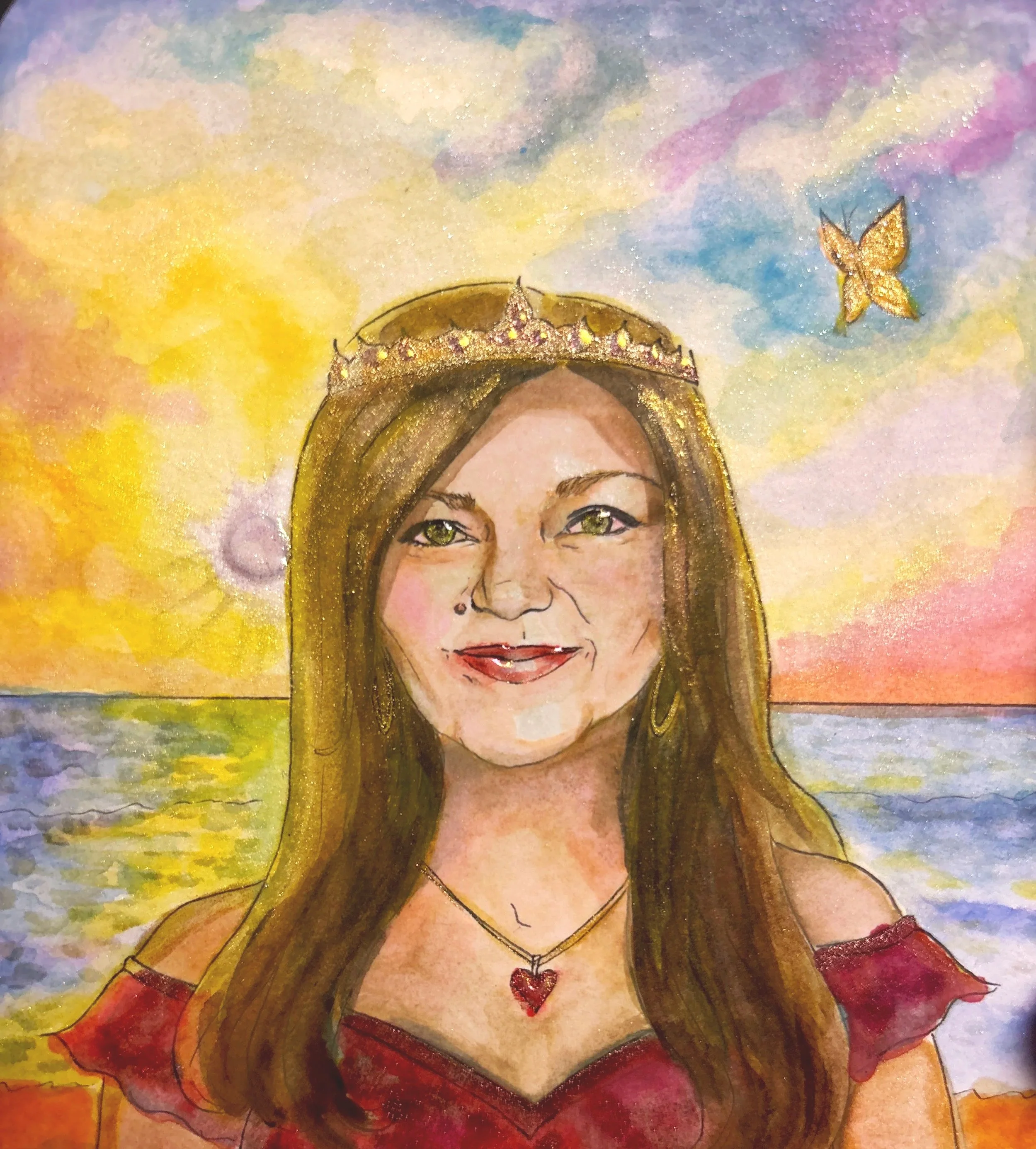
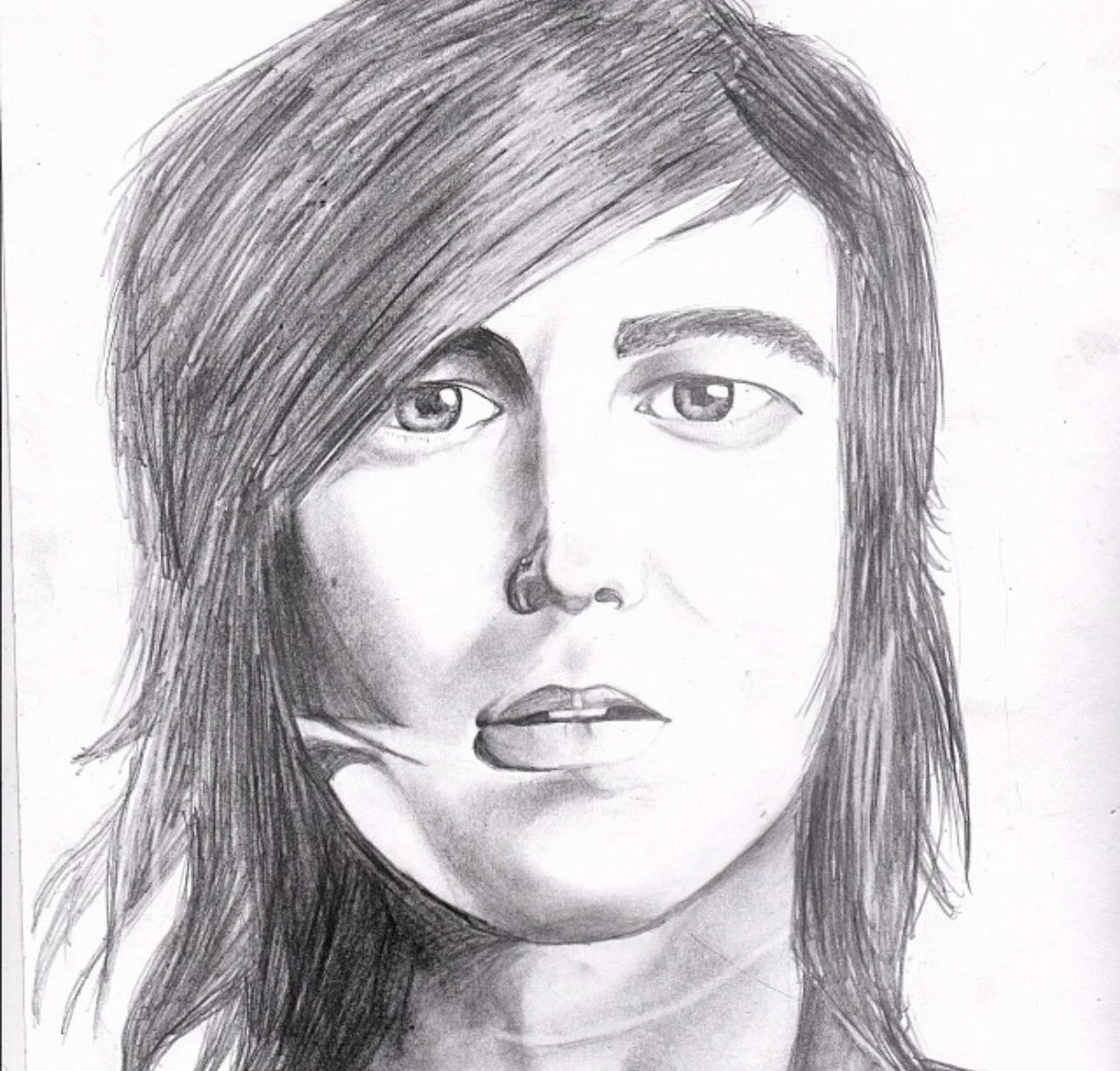
Long before any formal training, drawing was simply second nature to Eva— inherited from two parents who were both gifted illustrators. By age 12 she was already working with light and shadow, rendering realistic faces and pushing toward realism with pencil sketches, watercolor and acrylic paint.
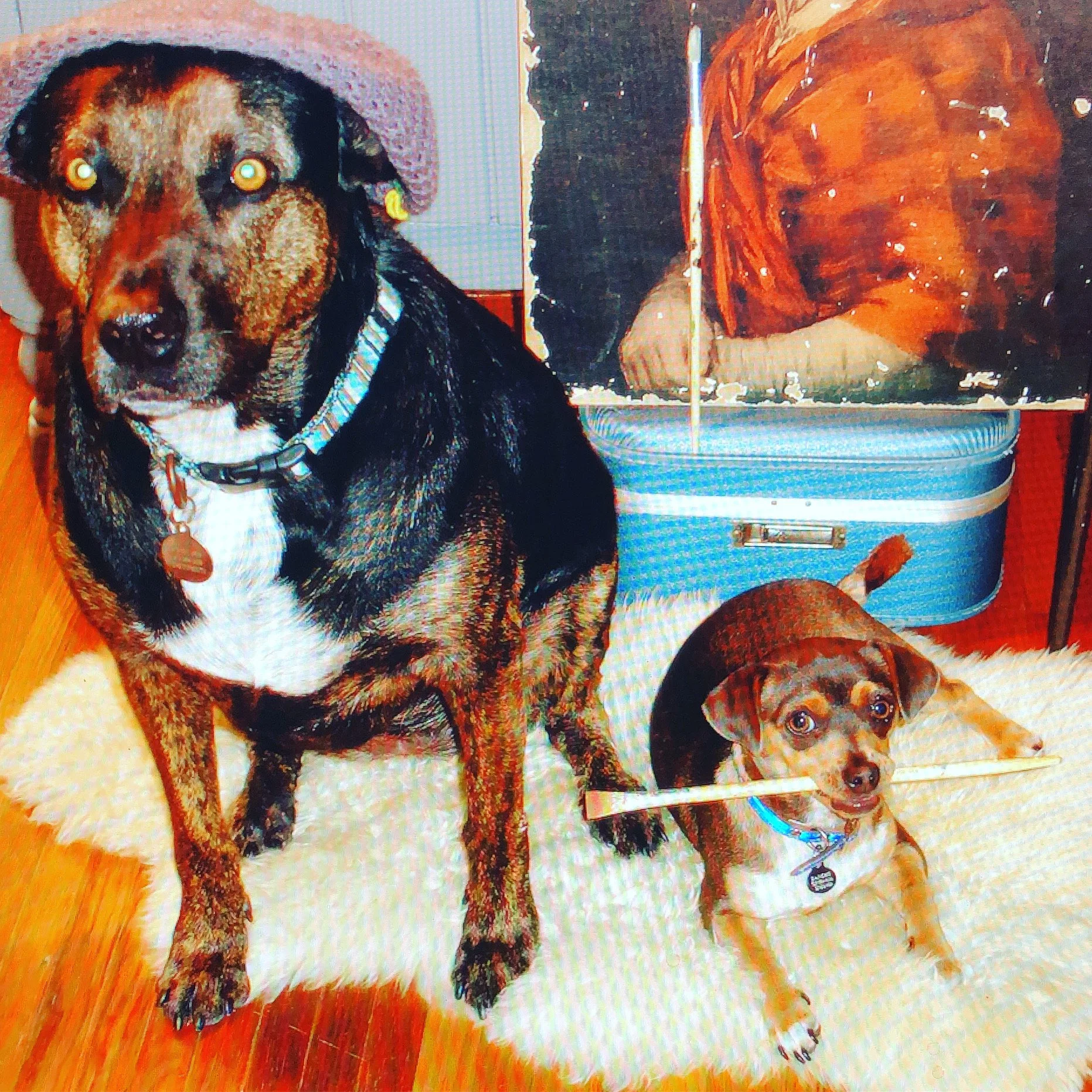
Running parallel to her love for plastic and fine arts, at age 9 she was teaching herself photography and videography — borrowing her moms digital camera and 2005 macbook to take conceptual portraits of her dogs and edit slideshows. After her mother’s passing she proceeded to inherit both items along with a 2010 iPod on which she began editing with basic apps and iMovie. With these new tools, Eva spent her pre-teen years channeling the grief of losing her mother through making hundreds of home videos with her friends and classmates, finessing her editing skills before going on to create her own youtube channel in 2013.

La Escuela Especializada Central de Artes Visuales (2015-2017)
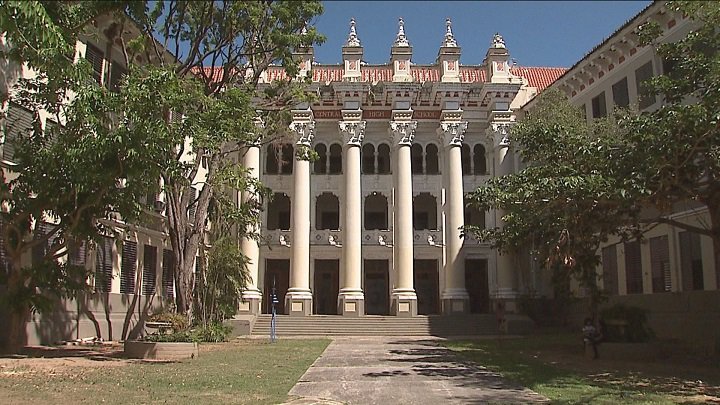
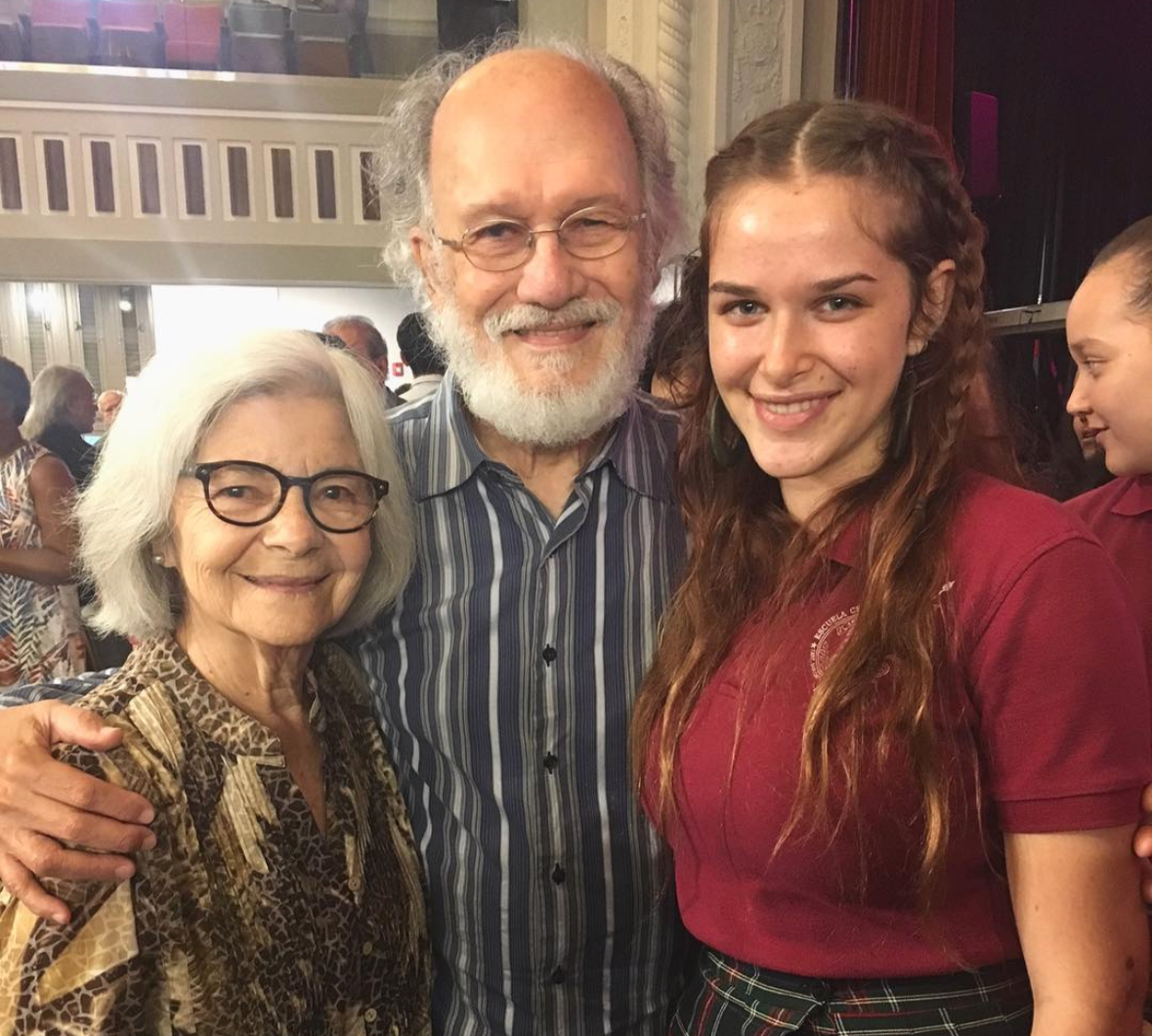
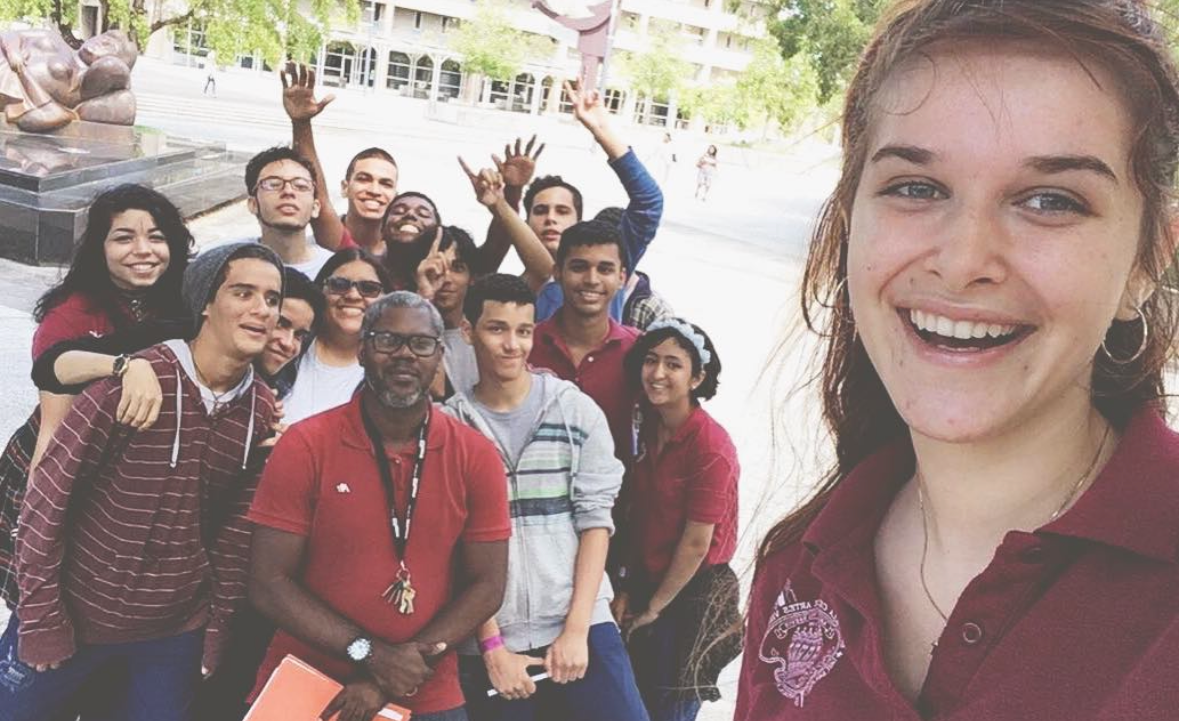
Her first years in Puerto Rico were spent at a private bilingual middle school in the San Juan area. She was, by her own account, the odd one out — the artsy, restless one who struggled to connect with a conventional curriculum. That changed in 2015, when her father enrolled her in La Escuela Especializada Central de Artes Visuales, Puerto Rico’s most prestigious public magnet school specializing in visual arts that would define her formative years. Housed in a historic architectural landmark in the heart of Santurce, the school has shaped some of Puerto Rico's most significant artists — among them celebrated director and filmmaker Jacobo Morales, whom Eva would later meet in person. Admission requires both academic merit and demonstrated artistic ability, and once inside, students are taught by professors who hold concurrent appointments at higher educational institutions. Because it is a public school, it draws from every walk of life, bringing together the island's most creatively gifted students regardless of background or economic means. The result is an environment that is both highly selective and genuinely diverse — rigorous in every academic dimension, not only in the arts.
For Eva, it was the first academic environment that felt like home. She had spent years being the creative outlier in rooms that didn't quite know what to do with her, and here she found herself surrounded by students who shared that same quality. She concentrated in 2D animation and illustration under Professor Abner Romero, building a thorough foundation in digital tools including Photoshop, Illustrator, Flash, and editorial design — skills that would later translate directly into her work in video production and creative direction. History came alive under Professor José M. Reyes Padilla, a respected historian who also teaches at the University of Puerto Rico, Río Piedras, and whose approach to Puerto Rican history left a lasting mark on her critical thinking.

New York Film Academy (2016)
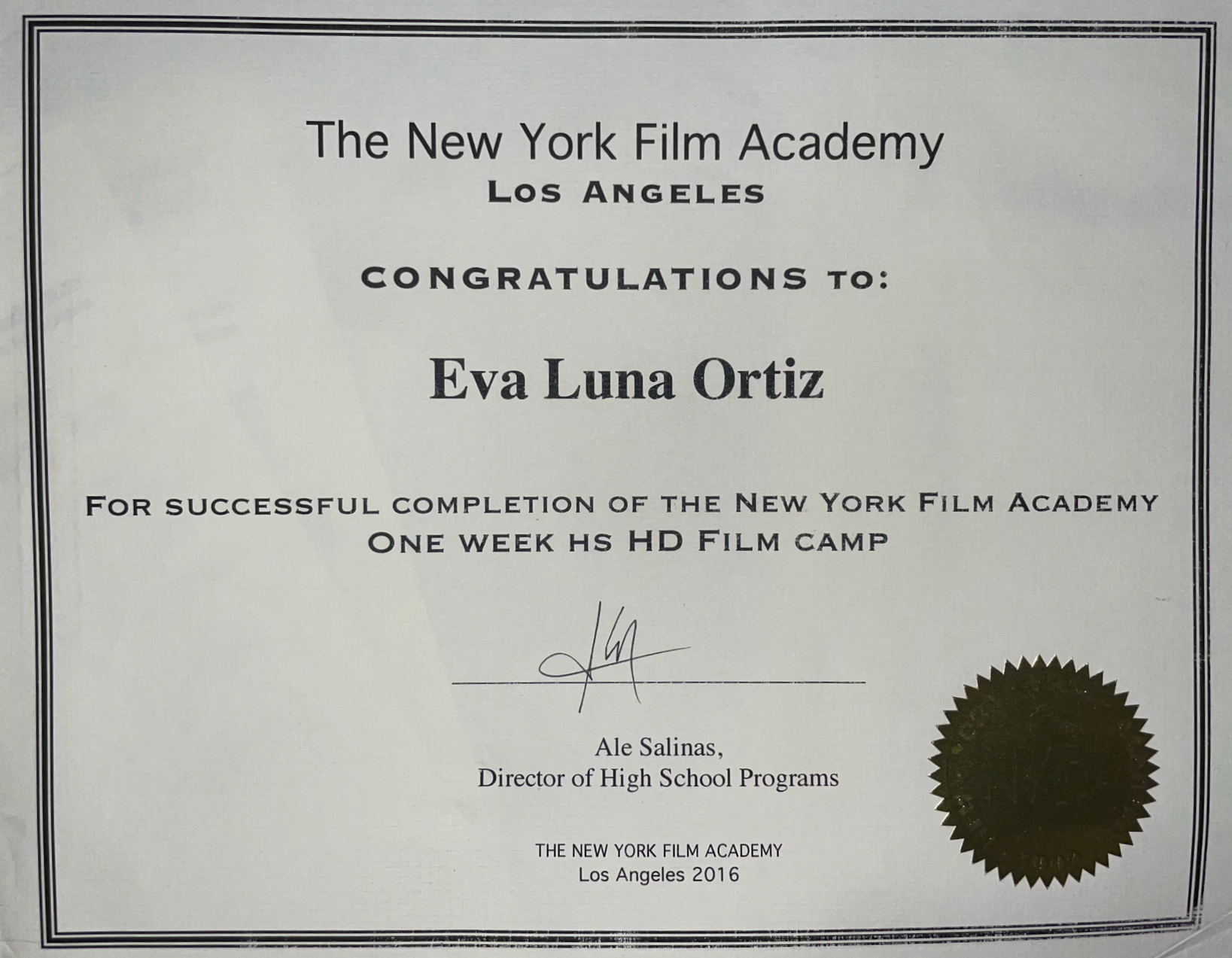
In the summer before her sophomore year, Eva (16) attended the New York Film Academy in Los Angeles, for a week-long intensive camp where she produced, directed, filmed and edited her own short film on the Universal Studios lot. She received hands-on training in directing and cinematography under the guidance of filmmakers like Mason Richards and Bart Mastronardi. Her short film titled Yellow Feels Like Love is the story of a blind man who paints through sensation rather than sight, guided by the texture of grass, the warmth of the sun, and the shape of a tree felt through touch. It was her first formal film production experience, one she approached with the confidence of someone who had been preparing for it, informally, for years.


Upon returning to La Escuela for her sophomore year, Eva made the pivotal decision to pursue early graduation instead of complete her senior year. Driven by a persistent eagerness to begin her filmmaking studies, she committed herself to an exceptionally demanding academic schedule. This period was defined by exhaustive after-school study sessions, private tutoring, and test preparation groups, as she worked to master advanced material across several subjects simultaneously.
During this rigorous year, a significant encounter in Eva’s advanced mathematics class fundamentally altered her perception of her own intellect. Professor Ruth Noemí Caraballo, presidential award-winning and university-level mathematician known for her exacting standards, was leading the class through a complex problem set in preparation for the final advanced exam. While the students typically collaborated to solve problems spanning geometry, algebra, and precalculus, the room fell silent when presented with a specific entirely new challenge: calculating the length of the longest line segment inside a rectangular prism when given only two variables, (height & length)
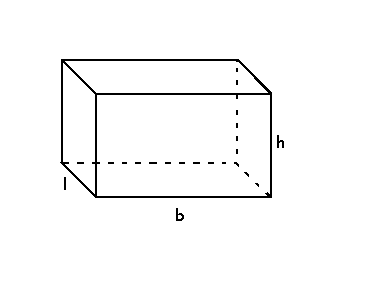
While a standard formula for this calculation exists, Eva and her classmates had not yet learned it. She had often struggled with algebra, however, she possessed an innate, highly developed sense of spatial reasoning. As she studied the problem, she visualized the prism in three dimensions, mentally slicing the shape diagonally to create a cross-sectional plane.
Not knowing the formula for this problem, she instead derived the solution by applying the Pythagorean theorem in two sequential stages:
The Planar Diagonal: She first focused on the flat, rectangular base of the prism. By imagining a line cutting across the floor of the shape from one corner to the opposite corner, she treated that line as the hypotenuse of a right triangle. She calculated this length using the width and length of the base.
The Space Diagonal: She then visualized a second, vertical right triangle existing entirely inside the prism. The "base" of this new triangle was the diagonal she had just calculated across the floor, and its "height" was the vertical edge of the prism.
By applying the theorem a second time, she found the "hypotenuse of the hypotenuse." This final line represented the space diagonal, extending through the empty center of the prism from a bottom corner to the opposite top corner. She solved the problem entirely through this layered visualization, effectively reconstructing the fundamental principles of three-dimensional distance in the moment.
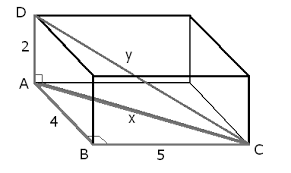
When Professor Caraballo called for the answer, Eva was the only student in the room who had solved the problem. This realization was startling, as it was the first time she had surpassed classmates who were traditionally considered the "math kids." When asked to demonstrate her method on the board, Eva’s visual logic initially puzzled the professor, as the approach did not follow the standard formula. However, as Eva illustrated her 3D derivation, the logic became clear. Professor Caraballo validated her work, noting that while her path was unconventional, it was entirely correct.
This moment served as a profound turning point for Eva. Having long considered herself a mediocre math student, she realized that her mind excelled at visuospatial intelligence; the ability to hold, rotate, and navigate precise 3D mental models in real time. She began to see the connection between this spatial instinct and her natural aptitude for cinematography, an insight that would later extend to her interests in architecture, construction, and the structural logic of digital systems.
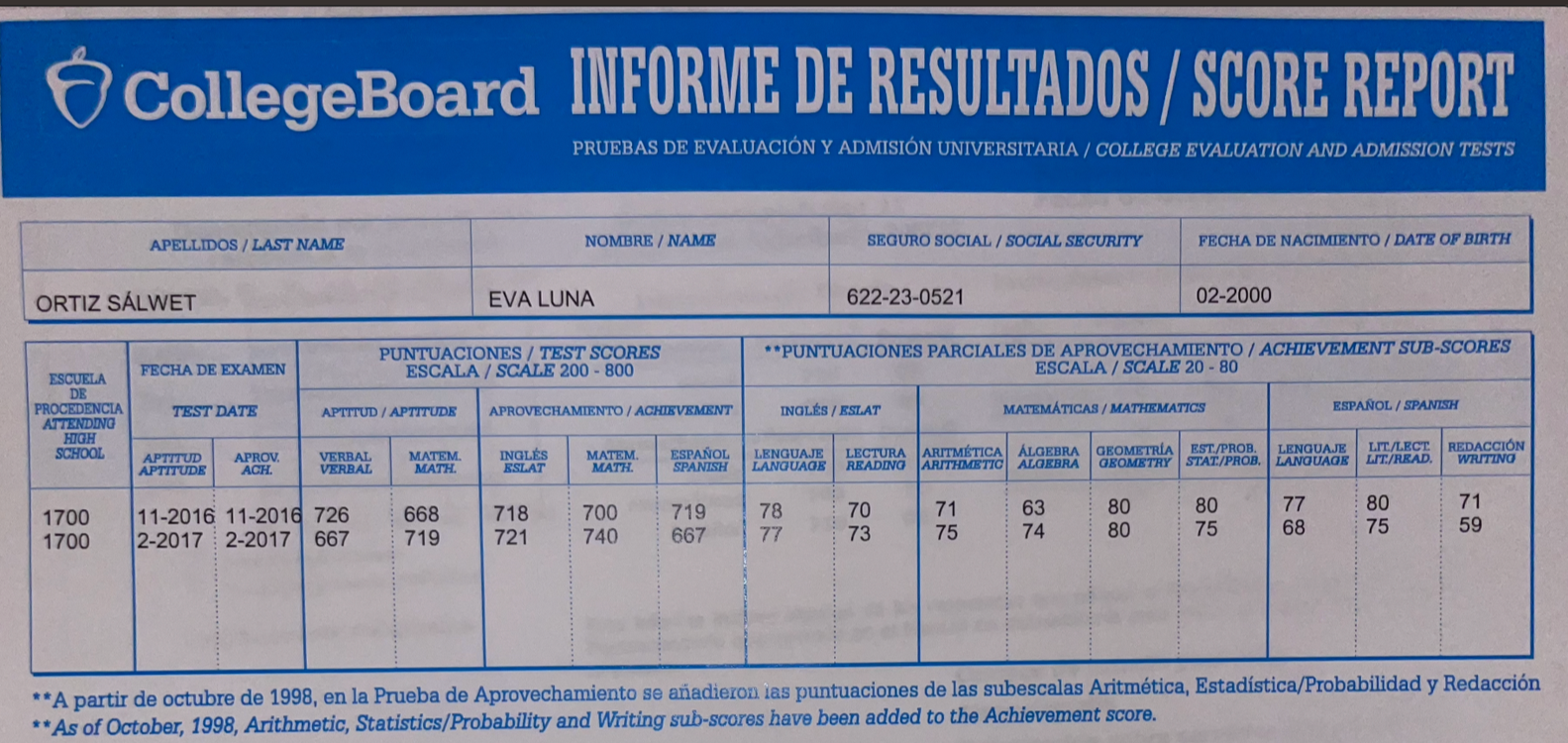
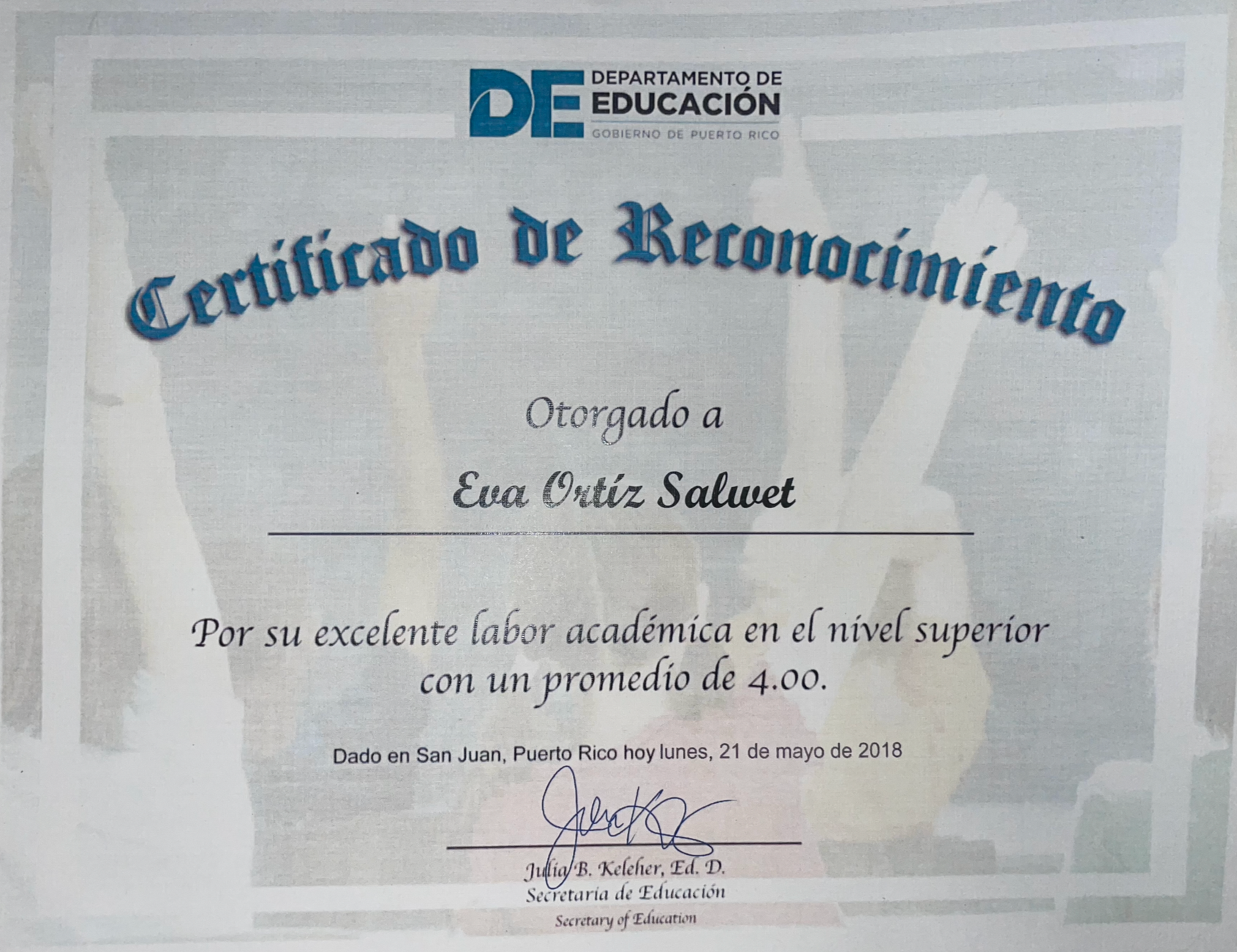
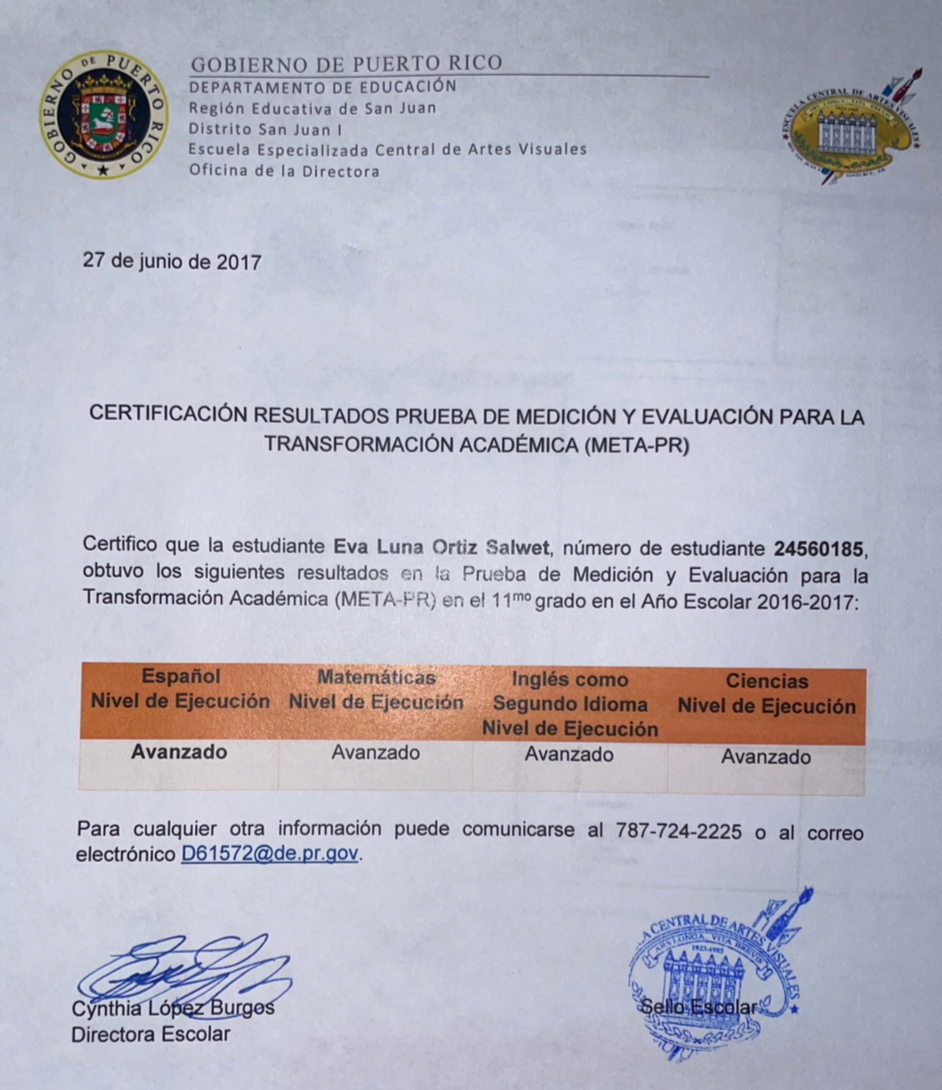
By the conclusion of the academic year, Eva’s performance solidified her standing as an elite student. She earned a total of 3,625 points on her College Board examinations, achieving a high score of 5 on the advanced exams for Mathematics, English, and Spanish. Additionally, she secured an advanced score on the Puerto Rico META exam and maintained a 4.0 GPA, ultimately meeting all requirements for her early graduation.
Universidad del Sagrado Corazón — San Juan, Puerto Rico (2017–2019)
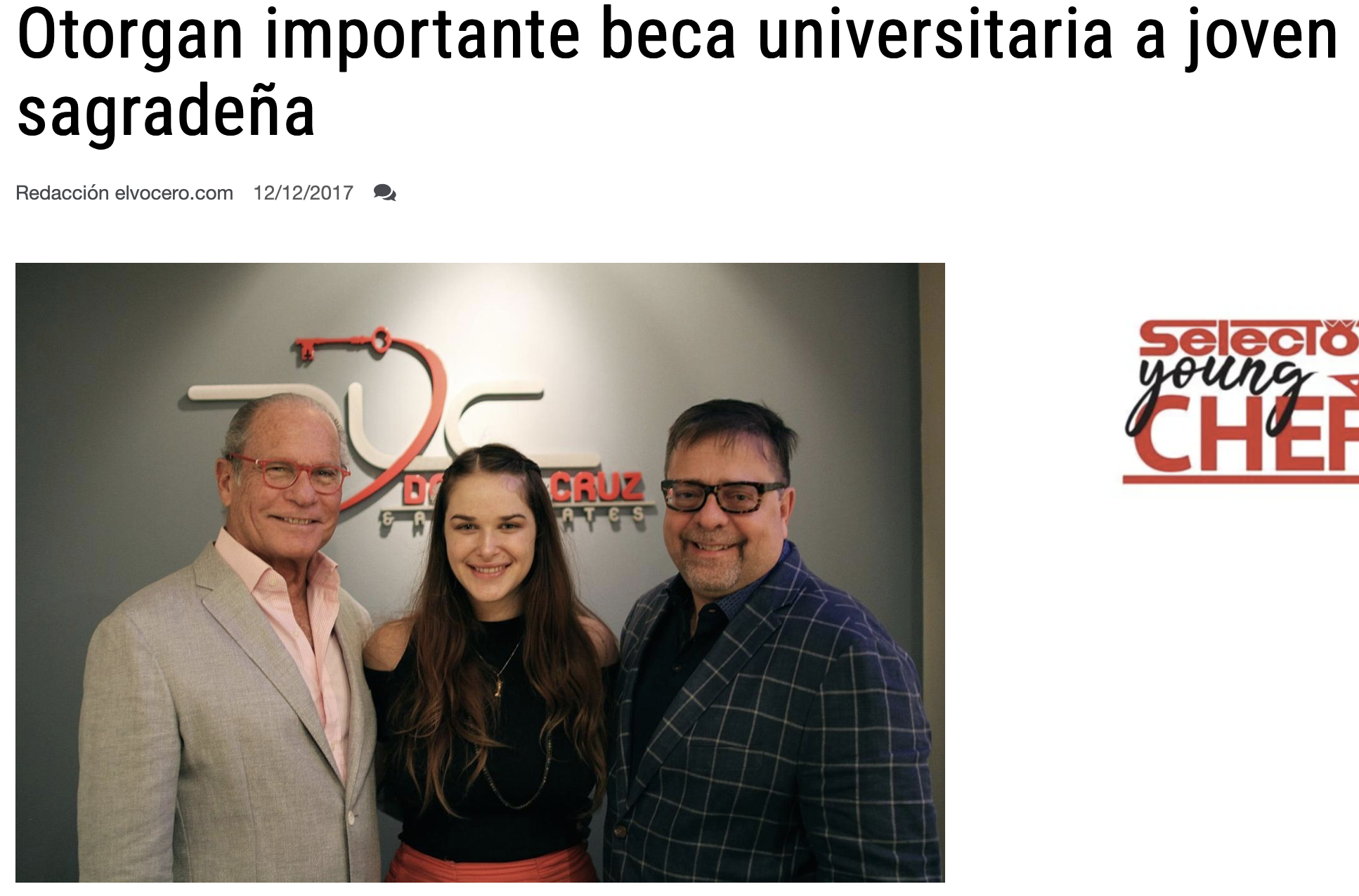
Eva graduated early and enrolled at the Universidad del Sagrado Corazón to study digital production — and did so on a full scholarship awarded by de la Cruz & Associates , one of Puerto Rico's most established and decorated advertising agencies. Operating for over four decades and affiliated with Ogilvy, one of the largest creative networks in the world, de la Cruz has built a reputation for internationally recognized work with global brands. Their decision to fund Eva's education in full, on the basis of her academic record alone, was covered by local press.
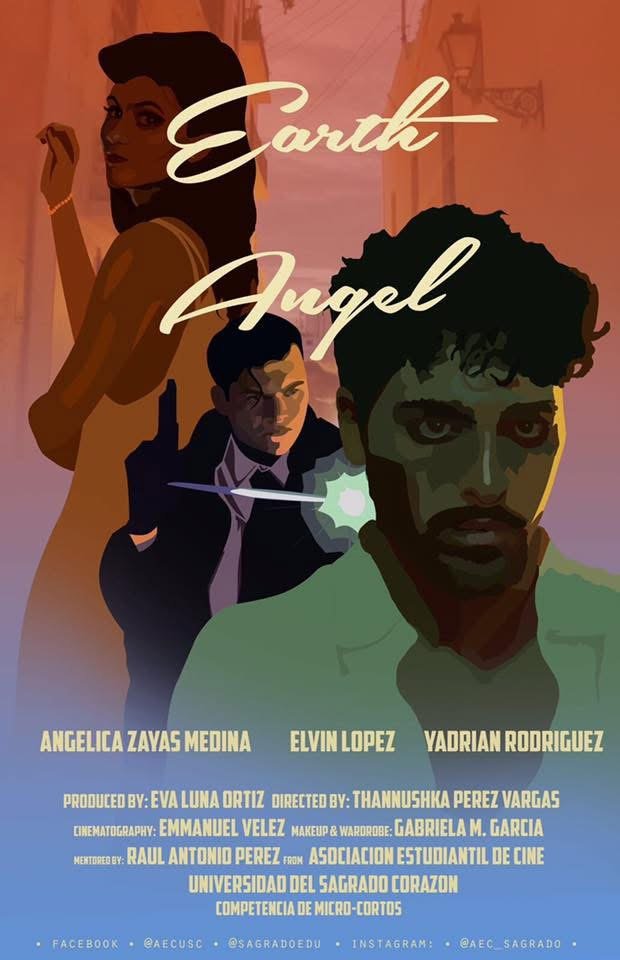
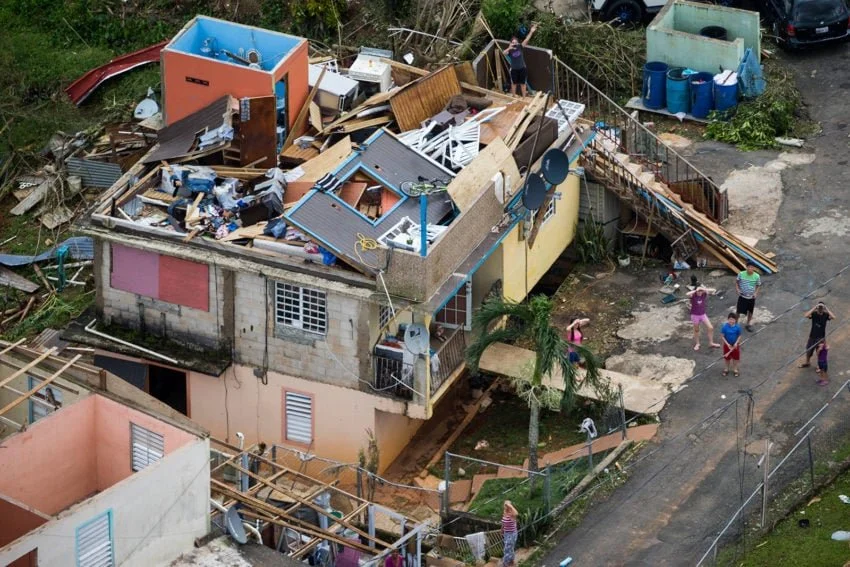
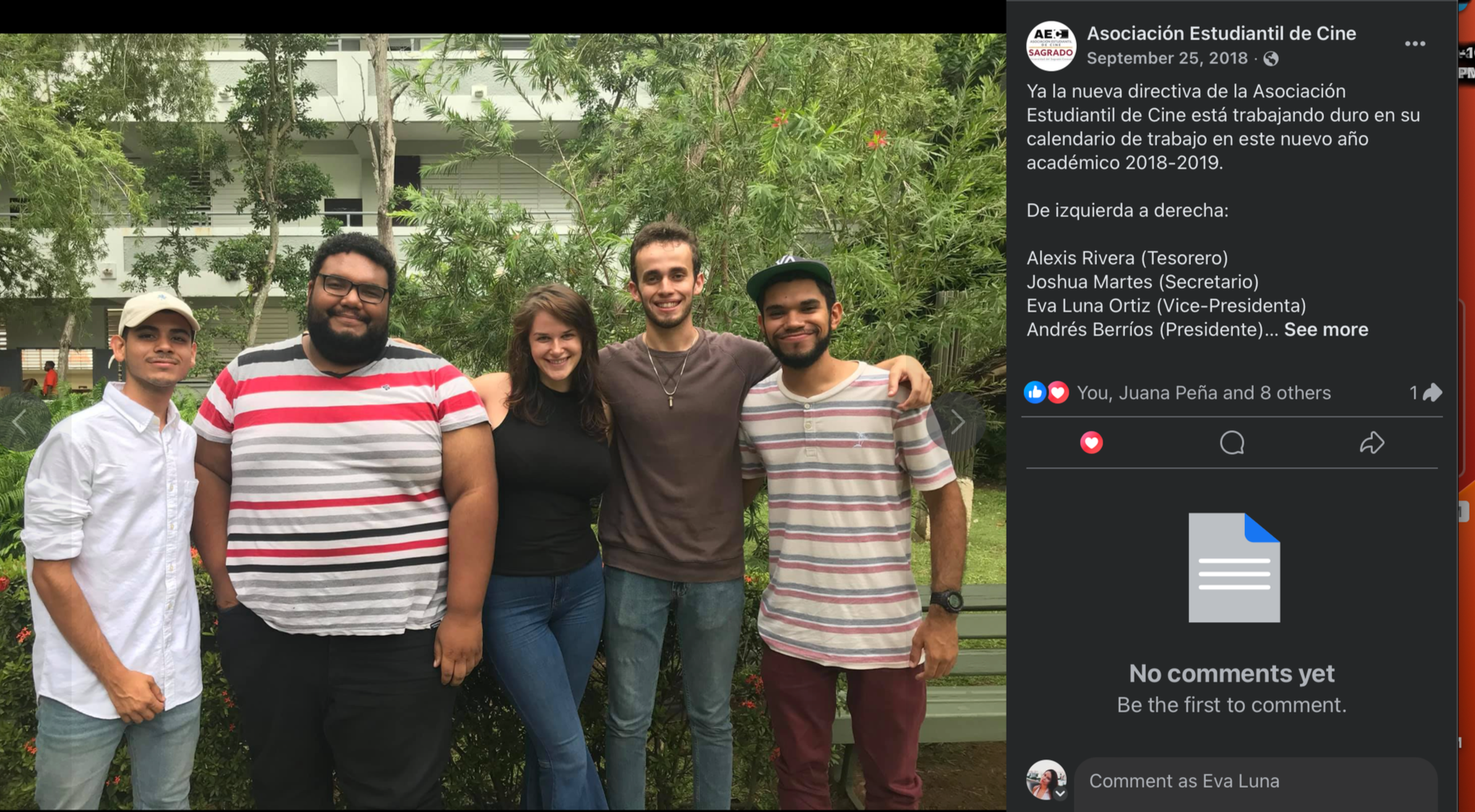
Only a month into beginning her freshman year at her exciting new college campus under a full scholarship, Hurricane María hit Puerto Rico on September 20, 2017. What followed was one of the most devastating natural disasters in Puerto Rico's modern history. Infrastructure collapsed. The academic system scrambled to hold itself together. Professors left the island. A mass exodus began. Classes resumed in an environment that bore little resemblance to normalcy, and the personal lives of nearly everyone around her became, simply, very hard. She arrived at Sagrado already a seasoned filmmaker. A decade of editing behind her, her own DSLR and years of self-directed production. What she found was an introductory curriculum — film theory before practice, aimed at students encountering a camera for the first time. She found herself teaching classmates the basics of equipment she had been operating for years. In May 2018 Eva was elected vice-president of the Student Film Association and served for a semester, but after completing 2.5 years towards her bachelor’s in digital production, she dropped out with a clear-eyed recognition that the environment had nothing left to offer her. Her plan was to go study abroad in Los Angeles or Spain. Only a month after dropping out while preparing to move, the Covid-19 global quarantine began and Eva was forced to postpone her future plans. She stayed in Puerto Rico and kept working with independent productions.

Habitat for Humanity Puerto Rico — Basic Construction Certification (2022)
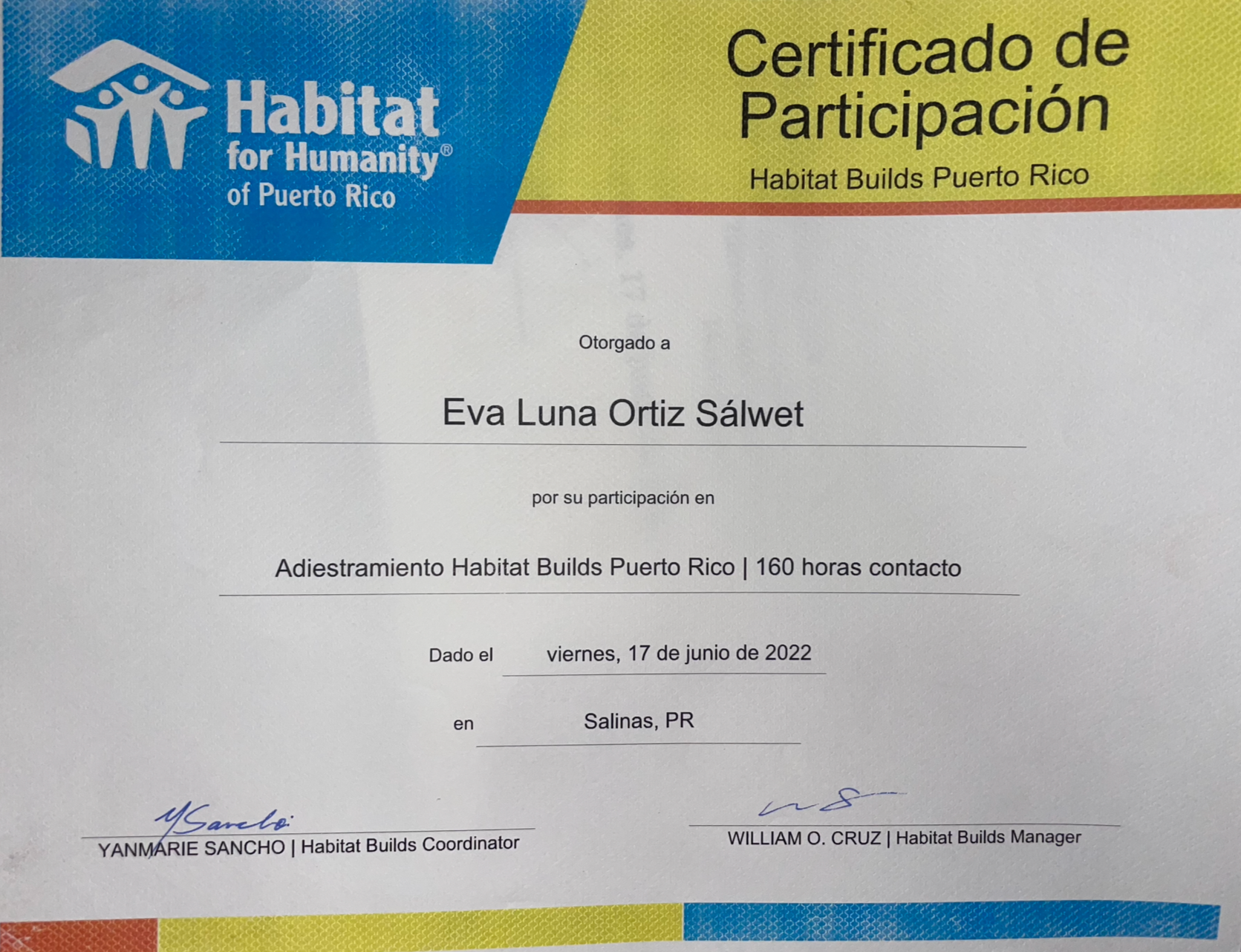
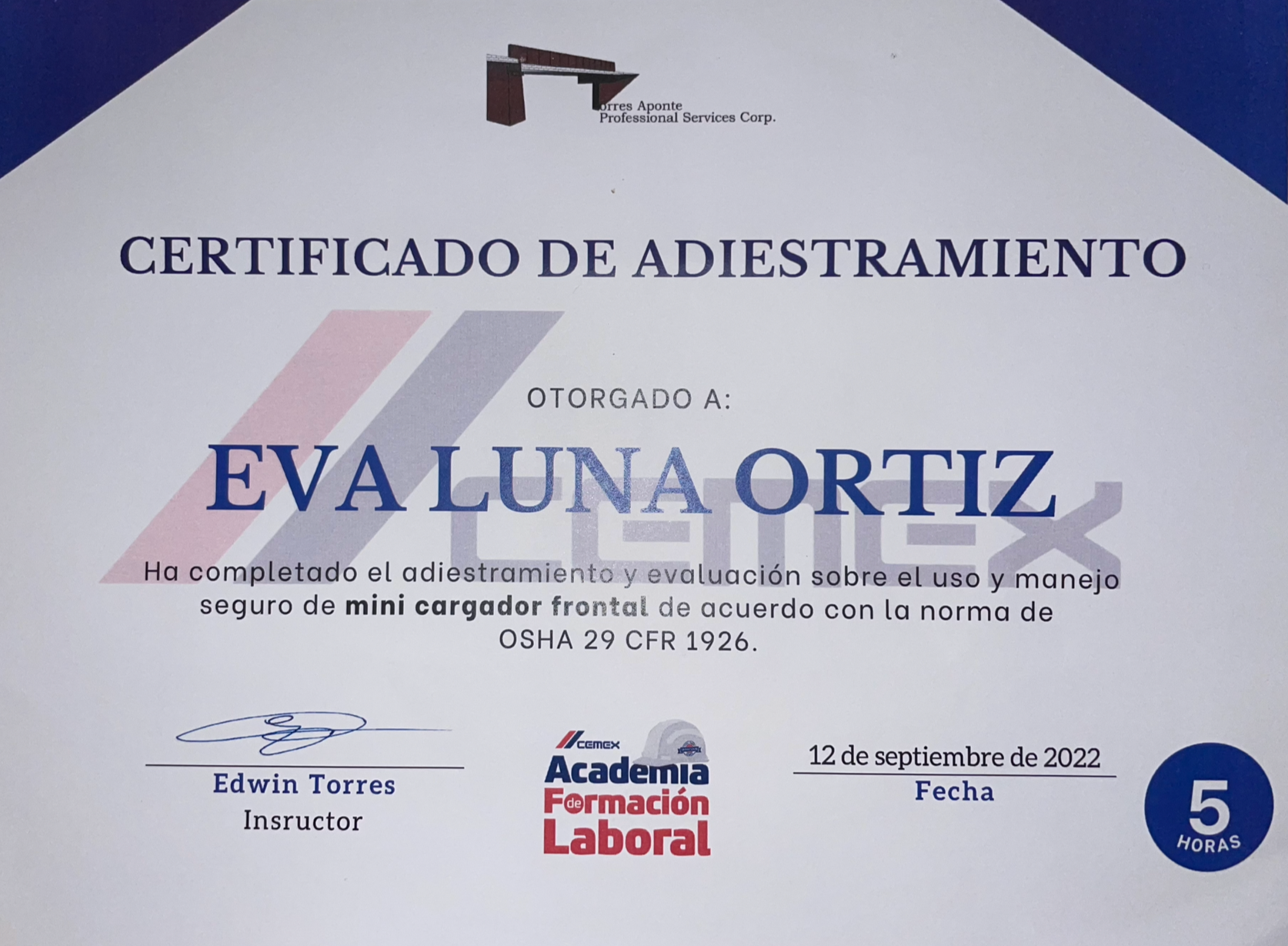
At twenty-two, Eva returned to formal learning through an unexpected door: construction. The interest was not new. As a child she had built dog houses, helped her father frame a treehouse, and told her mother at eight years old that she wanted to be an architect. That instinct had never gone away — it had just been set aside. Through Habitat for Humanity Puerto Rico, she completed a month-long intensive certification program covering electrical work, plumbing, carpentry, and masonry — one week per discipline. She then obtained an additional certification in the operation of a front-end loader with Cemex Academia de Formación Laboral.

Teclab — Buenos Aires, Argentina (2024–Present)
In 2024, Eva relocated to Buenos Aires. She enrolled at Teclab, a technical institute, to study programming; building the web and app design foundation that now underpins her creative agency work. After a semester, she made a deliberate pivot. Recognizing that programming was becoming increasingly automatable, she redirected toward cybersecurity, where she has been studying since 2025 with a focus on GRC: Governance, Risk, and Compliance, with particular attention to Latin American regulatory frameworks. Along with her associate’s degree with Teclab, she is currently working toward the Google Cybersecurity Fundamentals certification and the CompTIA Security+, while applying her developing expertise directly to her own creative practice and client work.